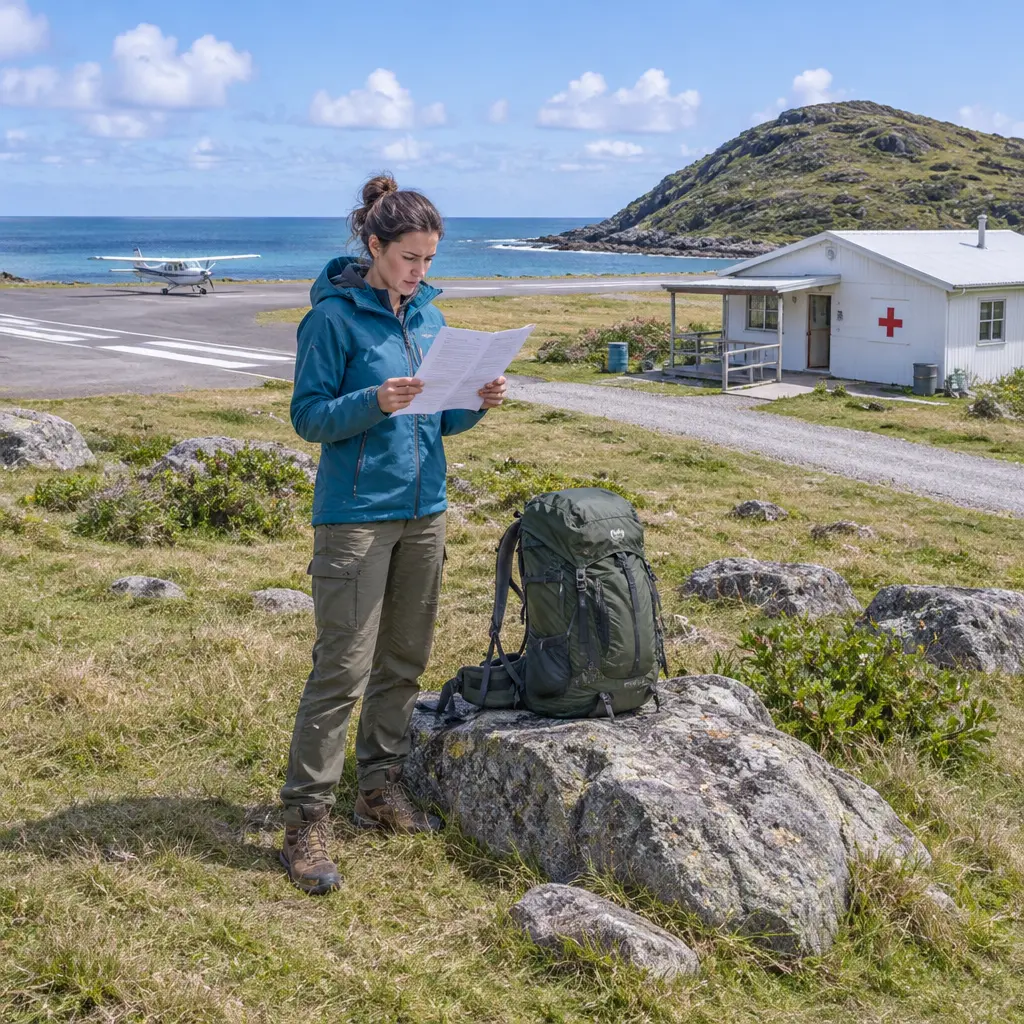
Medical evacuation coverage is insurance that pays for medically necessary transport to an appropriate treatment facility when local care is inadequate. For travelers heading to remote destinations, the critical question is not simply whether a policy says “medical evacuation,” but whether its terms cover the location, transport method, decision-maker, destination, and costs involved. The U.S. Centers for Disease Control and Prevention (CDC) advises travelers that medical evacuation can cost more than $100,000, depending on circumstances and destination. Reviewing the policy’s trigger, geographic limits, provider rules, and exclusions before departure can help reveal gaps that ordinary travel or health insurance may leave behind.
Medical evacuation coverage defines when remote-destination transport is insured
Medical evacuation coverage is a benefit that reimburses or arranges transportation for a person with a serious illness or injury to a suitable medical facility. The U.S. Department of State explains that the U.S. government does not pay for citizens’ medical bills or medical evacuation abroad; travelers are responsible for arranging and paying for care. That makes the policy’s precise wording important, especially where roads, hospitals, or emergency services are limited.
The term covers several related services, not just an air ambulance. Depending on the contract, benefits may include transport to the nearest adequate hospital, transfer to a more capable facility, medically supervised repatriation to the traveler’s home country, or local ground ambulance transport. These services are distinct from nonmedical rescue, such as a helicopter search-and-rescue operation to retrieve an injured hiker from a mountain. A policy may cover one and exclude another.
Medical necessity and the evacuation trigger
The evacuation trigger is the condition that must be met before the insurer will authorize transport. Many policies require a serious illness or injury, a determination that suitable treatment is unavailable locally, and approval by the insurer’s medical team. “Medically necessary” does not automatically mean that a traveler prefers treatment at home or believes another hospital is better; the insurer may require evidence that the current facility cannot provide appropriate care.
Check who makes that determination and what happens in an emergency when prior approval is impractical. Some contracts require the traveler, a companion, or a treating clinician to contact the assistance provider as soon as possible. Others permit emergency action followed by prompt notification. The distinction can affect reimbursement, so record the assistance number offline and ask the insurer to explain its emergency-notification rules in writing.
Nearest adequate facility versus transport home
“Nearest adequate facility” generally means a hospital capable of treating the immediate condition, not necessarily the most advanced hospital or the traveler’s preferred destination. A policy may pay to move a patient from a remote island to a regional hospital while excluding a later flight home. Repatriation is a separate benefit and may require the patient to be stable enough to travel and to receive medical supervision during transport.
Ask whether the insurer can select the destination, whether a treating physician must agree, and whether a companion’s travel is covered. Also verify if the benefit pays for a medically staffed commercial flight, a charter aircraft, or only the least costly transport deemed suitable. A high headline limit does not guarantee that every preferred route or service qualifies.
Policy limits and provider rules determine what evacuation costs are covered
A coverage limit is the maximum amount payable under a benefit, subject to the policy’s conditions and exclusions. It should be assessed alongside the insurer’s provider network, payment procedure, and definition of eligible expenses. The CDC’s travel guidance warns that evacuation costs can exceed $100,000; that figure is a cautionary benchmark, not a universal price quote. Actual costs vary with distance, aircraft availability, medical staffing, weather, and the patient’s condition.
The practical distinction is between a policy that promises assistance and one that pays the resulting bill. Some assistance companies coordinate a mission but require the traveler to have insurance or pay costs not covered by the contract. Before buying, ask whether the insurer arranges and pays the provider directly, reimburses the insured afterward, or uses both methods. A traveler may face substantial upfront expenses if direct payment is not available.
Per-person limits, sublimits, and eligible expenses
The stated evacuation maximum may be per person, per trip, or shared across covered travelers, and the contract may impose smaller sublimits on particular services. Confirm whether it includes the aircraft, medical personnel, ground transfers, fuel surcharges, and necessary accommodation during an arranged transfer. Ask whether the benefit is primary or excess to other insurance and whether deductibles or co-insurance apply.
Read the exclusions as carefully as the limit. Common issues to investigate include pre-existing conditions, pregnancy, alcohol or drug-related incidents, adventure activities, travel against medical advice, and destinations subject to government warnings. These are not universal exclusions; insurers define them differently. The U.S. State Department’s travel advice can identify destination risks, but it does not determine whether a particular claim is covered.
Authorized providers and assistance-company control
Many plans require the traveler to use the insurer’s assistance company or obtain authorization before arranging non-emergency transport. This can help coordinate medical records, receiving hospitals, aircraft, and local permissions. It can also create a coverage risk if a traveler hires an independent aircraft without first contacting the insurer, unless immediate action was necessary and the contract allows an exception.
Before departure, obtain the assistance provider’s name, 24-hour phone number, and procedure for weak or unavailable mobile service. Ask whether the company can operate in the exact country or territory, including remote islands, high-altitude areas, polar regions, or politically unstable locations. “Worldwide” should be checked against territorial exclusions, sanctions restrictions, and operational limitations in the actual policy documents.
Remote-destination clauses narrow evacuation coverage in specific ways
A remote destination is a place where access to appropriate care or transport may be limited by geography, infrastructure, weather, or security conditions. The insurance issue is not the label “remote” itself, but whether the contract covers the activity and location and whether an evacuation can be safely arranged. A policy’s area-of-coverage definition, hazardous-activity terms, and exclusions may matter more than the destination’s distance from home.
Remote travel can involve several different forms of response: medical evacuation from a hospital, search and rescue from the incident site, and repatriation after stabilization. These are related but not interchangeable benefits. A traveler trekking in the Andes, sailing between Pacific islands, or working at a remote industrial site should verify each service separately rather than assume a single evacuation limit covers all stages.
Search and rescue versus medical evacuation
Search and rescue locates and retrieves a person from a difficult-to-reach area; medical evacuation moves a patient to medical care or another appropriate facility. Some travel policies exclude search-and-rescue costs even when they cover subsequent ambulance or air transport. Others provide a separate, capped rescue benefit or restrict it to officially organized operations.
For outdoor trips, check whether the policy names the planned activity and covers rescue from the actual terrain. Ask whether it pays for a helicopter, local rescue teams, or only transport after the patient reaches a pickup point. The U.S. National Park Service notes that rescue operations can involve specialized personnel and equipment; in remote settings, coordination may depend on local authorities and conditions, not solely on an insurer’s assistance provider.
Adventure activities, altitude, and operational exclusions
Adventure-activity provisions specify whether injuries arising from activities such as mountaineering, scuba diving, skiing, or motorcycling are covered. Definitions can hinge on altitude, depth, equipment, guide requirements, or whether the activity is competitive or professional. Do not rely on a sales summary that says “adventure sports included”; compare the activity definition and exclusions with the exact itinerary.
Likewise, an insurer may limit service where aircraft cannot fly safely because of weather, runway conditions, altitude, conflict, or regulatory restrictions. A covered medical event does not guarantee immediate extraction. Ask what the policy provides if evacuation is temporarily impossible, local treatment is required first, or the patient must be moved in stages. The insurer’s obligation is governed by the contract, while operational decisions also depend on safety and local permissions.
Pre-existing conditions, stability, and continuity of care
A pre-existing-condition clause determines whether a medical condition that existed before coverage began can affect payment. Some policies exclude related claims; others offer a waiver if eligibility conditions are met, such as purchasing within a specified period after the initial trip deposit. Definitions and requirements vary, so disclose relevant facts accurately and request written confirmation of any waiver.
Continuity-of-care terms also matter. The insurer may require the patient to be medically stable before transport and may choose the safest suitable destination rather than the traveler’s home. Confirm whether the policy covers a medical escort, oxygen, special seating, or a stretcher when clinically required, and whether a companion can accompany the patient. These details can determine whether the benefit is practically usable.
Travelers can verify medical evacuation clauses before departure
Verification means matching policy language to the planned destination, activities, medical needs, and likely transport constraints. Insurance summaries and promotional pages are useful starting points, but the certificate, policy wording, and endorsements control coverage. The U.S. State Department recommends that travelers understand their insurance and consider medical evacuation coverage when traveling abroad, especially where medical facilities may be limited.
A practical clause-checking checklist
- Confirm that the destination and every transit country fall within the policy’s geographic coverage.
- Identify the evacuation trigger, the required medical determination, and who has authority to approve transport.
- Distinguish transport to the nearest adequate facility from repatriation to the home country.
- Check per-person limits, sublimits, deductibles, eligible expenses, and whether payment is direct or reimbursed.
- Verify coverage for search and rescue, planned activities, altitude or depth limits, and any required guides or permits.
- Review pre-existing-condition rules, stability requirements, travel warnings, and other exclusions.
- Save the 24-hour assistance number offline and learn how to contact the provider where mobile service is unreliable.
- Ask the insurer specific questions in writing and keep its response with the policy documents.
Use a remote-itinerary scenario to test the wording
Consider a traveler injured on a remote island where a clinic can provide initial stabilization but lacks surgical capability. The traveler should establish whether the insurer can arrange transport to a regional hospital, whether the policy covers the aircraft and medical crew, and whether the insurer or treating doctor selects the destination. Then check whether a later transfer home is covered separately. If the injury occurs during a scuba excursion, confirm that the activity and any depth limits are covered and whether rescue from the boat or dive site is included.
This scenario illustrates why a single dollar limit is not enough to assess protection. The policy may cover the hospital transfer but not the initial rescue, or it may pay for transport only after insurer approval. A careful review identifies these gaps while there is still time to compare plans or change the itinerary.
Conclusion: verified evacuation clauses reduce avoidable coverage gaps
Medical evacuation coverage depends on more than a headline benefit amount. Travelers need to understand the medical-necessity trigger, the difference between evacuation and repatriation, the limits and eligible expenses, provider-authorization rules, and remote-destination exclusions. Search and rescue, adventure activities, pre-existing conditions, and operational constraints should be checked against the specific trip.
Before leaving, read the full policy, contact the insurer with itinerary-specific questions, and keep emergency assistance details accessible offline. For further guidance, consult the CDC’s travel insurance information and the U.S. State Department’s destination advisories, then confirm coverage directly with the insurer. This preparation cannot guarantee an evacuation will be possible, but it can make the financial and logistical terms clearer before a crisis.
Sources: Centers for Disease Control and Prevention, Travelers’ Health: Travel Insurance, https://wwwnc.cdc.gov/travel/page/travel-insurance; U.S. Department of State, Insurance, https://travel.state.gov/content/travel/en/international-travel/before-you-go/your-health-abroad/insurance.html; U.S. Department of State, Medical Assistance, https://travel.state.gov/content/travel/en/international-travel/emergencies/medical-assistance.html; National Park Service, Search and Rescue, https://www.nps.gov/articles/search-and-rescue.htm